
In manufacturing, overmoulding is essential for combining aesthetics, ergonomics, and functionality. However, delamination between thermoplastic elastomers (TPE-S) and rigid substrates represents a critical challenge. To ensure component reliability, Franplast performs advanced adhesion tests in compliance with the German VDI 2019 standard.
By analyzing bond strength through a 90° peel test specifically designed for these joints, we classify the failure mode and optimize interfacial adhesion. This approach prevents scrap and design issues, ensuring that our TPE compounds deliver optimal performance in every two-component application.
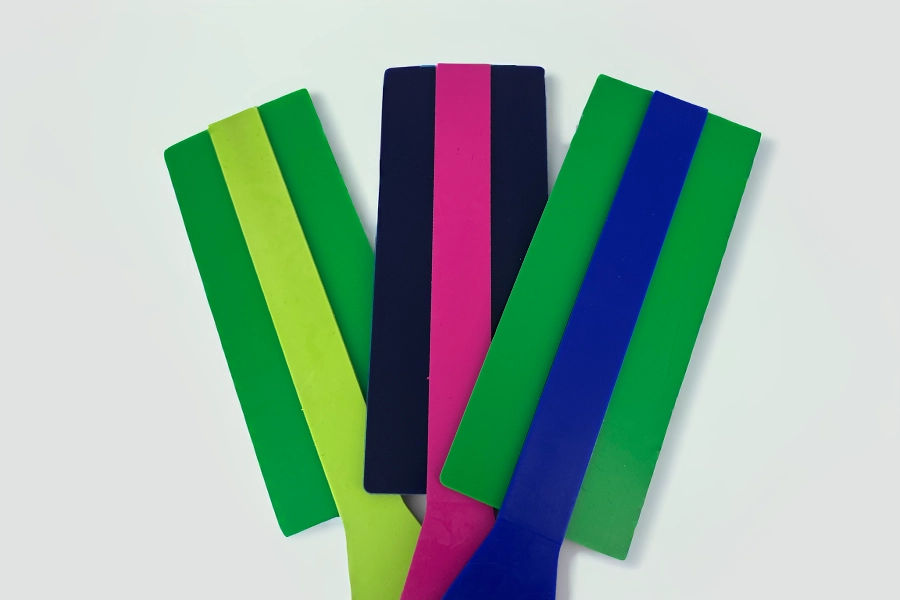 The importance of TPE-S materials in 2K overmoulding
Overmoulding is one of the most effective technologies for moulding a soft material onto a rigid component. In this field, styrene-based thermoplastic elastomers (TPE-S) stand out as the ideal choice for producing grips, seals, and bi-material components. Key advantages of TPE-S materials include:
- Broad adhesion compatibility: TPE-S can adhere directly to rigid substrates, ranging from commodity plastics (PP, PE) to complex engineering polymers (ABS, PC, PA, Nylon) and even metal.
- Tactile and aesthetic properties: They guarantee an excellent soft-touch feel, anti-slip properties, vibration damping, and easy colorability.
- Process efficiency and sustainability: Being thermoplastic materials, they do not require vulcanization, reducing cycle times, while processing scrap is 100% recyclable.
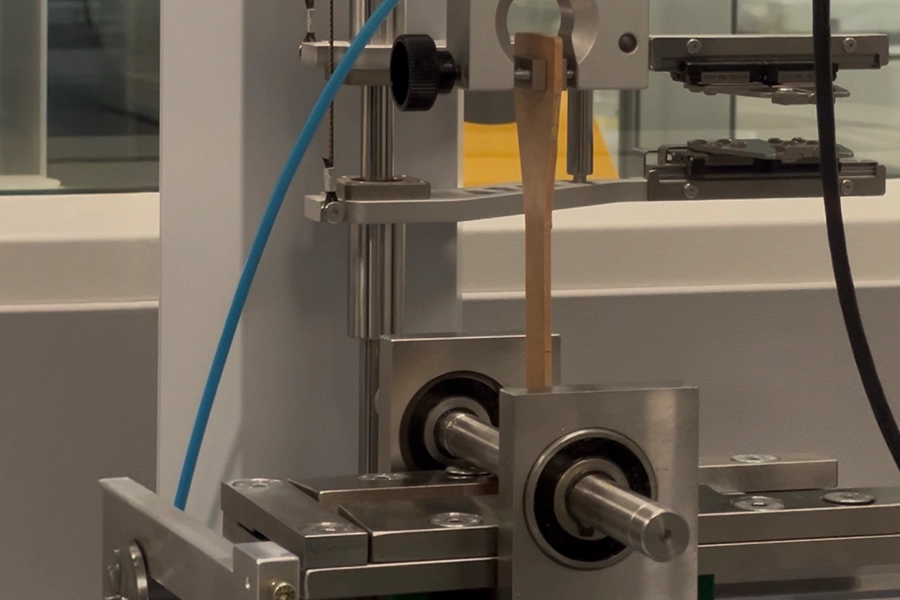 Preventing TPE delamination: the role of the VDI 2019 standard
Despite their excellent properties, the success of 2K overmoulding depends on interfacial bond strength. Failure, known as delamination, irreversibly compromises the functionality of the final product. To objectively measure chemical adhesion, the German VDI 2019 standard has become the global benchmark: unlike old empirical tests, this standard defines a rigorous 90° peel test procedure specifically designed for overmoulded joints between TPE and rigid substrates.
The concrete benefits of adopting this standard include:
- Comparable scientific data: adhesion strength is expressed in N/mm, offering precise numerical values to compare formulations.
- Process parameter optimization: it allows evaluating how moulding temperature and injection speed affect molecular bonding.
- Quality control and risk reduction: it provides clear criteria to prevent issues during the design phase.
At Franplast, using the VDI 2019 standard is essential: it represents the only tool capable of certifying adhesion strength, ensuring high quality standards and production repeatability over time.